Stainless Steel vs Plastic Litter Box: Which Is Better?
Stainless steel vs plastic litter boxes compared on odor, scratches, wall height, covers, weight, cleaning, and cost, with advice on which to buy.
 By Dave Curtis
Updated October 15, 2026
By Dave Curtis
Updated October 15, 2026

Stainless steel vs plastic litter box: steel is the better long-term choice if odor that lingers in the pan is your main problem, because a smooth steel surface does not scratch and soak up smell the way older plastic can. Plastic wins on price, shape, and choice: it is cheap, light, and comes in tall, shielded, and covered designs that steel pans rarely match. Many owners end up with steel for the main box and plastic where a hood or very high walls matter.
This comparison uses two popular open pans as examples, the Kirecoo stainless steel box and the IRIS USA high-sided plastic box, plus published specifications and Amazon owner ratings. It is research-based, not a home trial.
This guide is general product information, not veterinary advice. If your cat’s litter box habits change, such as straining, going outside the box, or producing much more or less urine than usual, contact your veterinarian.

Prime Kirecoo Stainless Steel Cat Litter Box


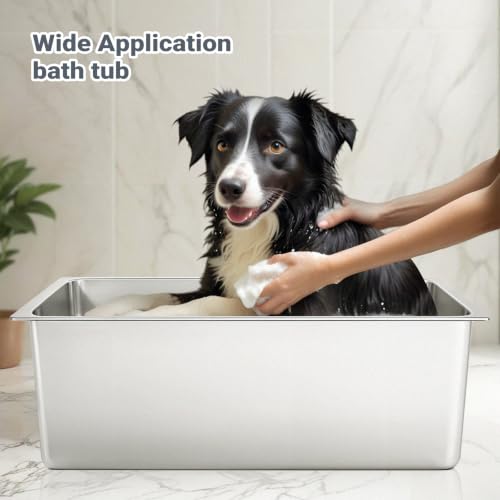
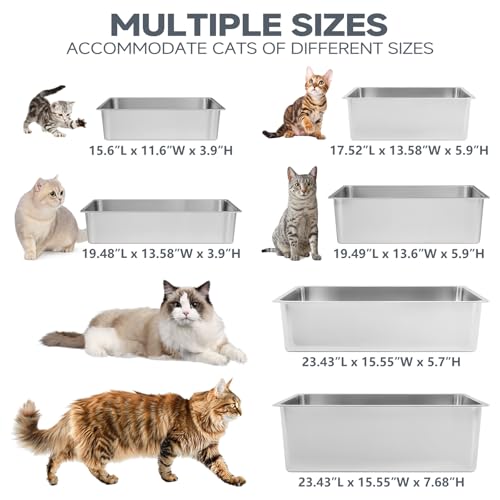
As an Amazon Associate we earn from qualifying purchases. Product prices and availability are accurate as of the date/time indicated.

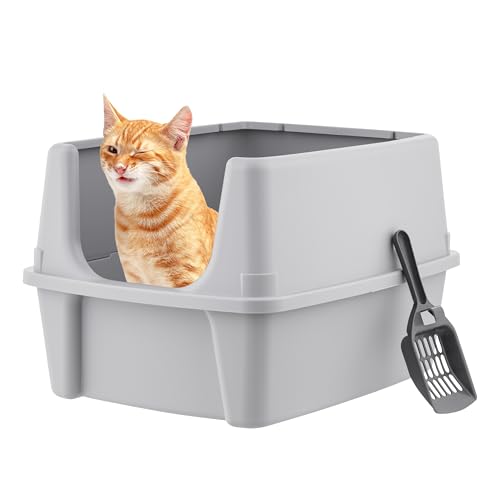
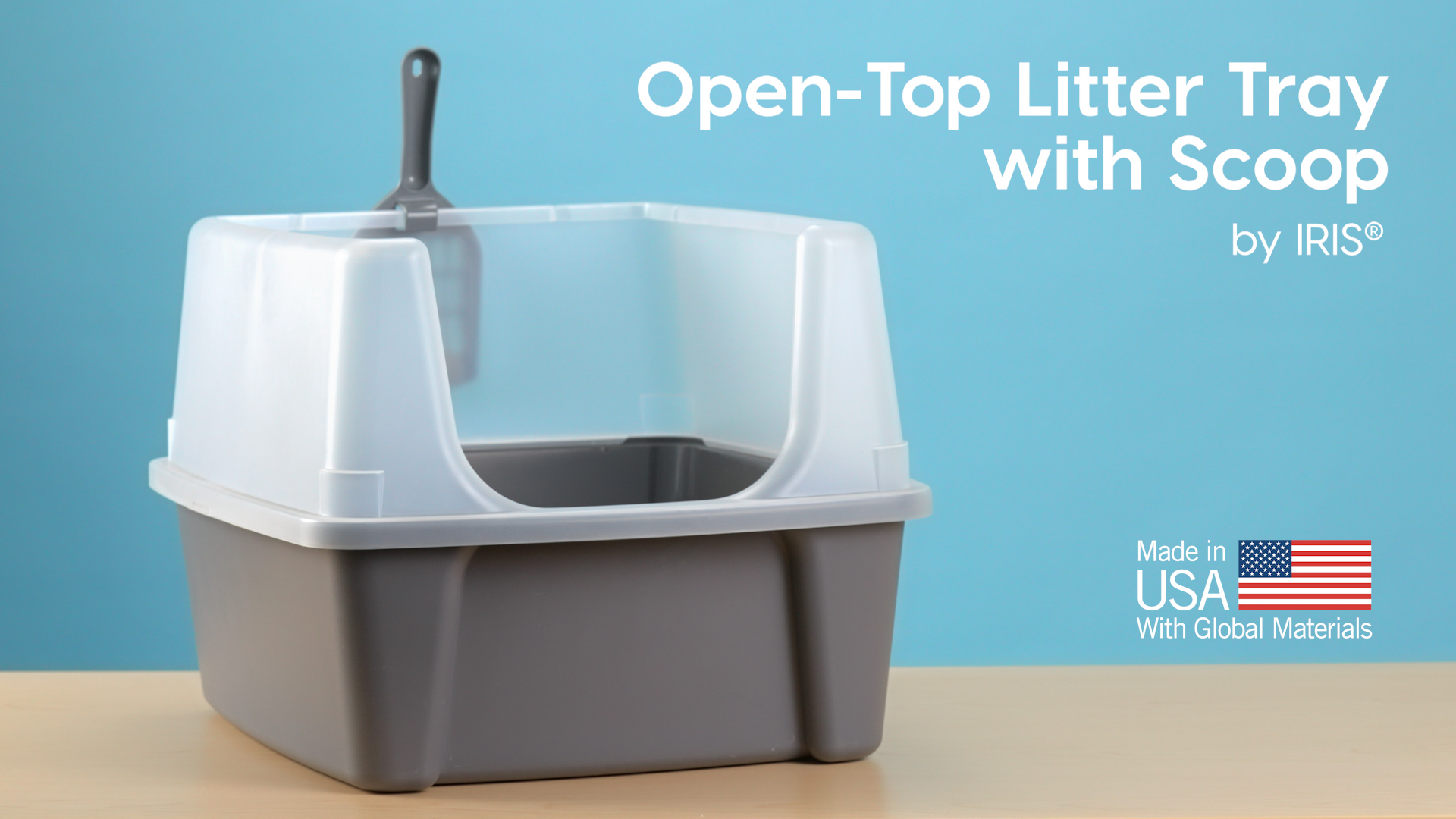
Prime IRIS USA High Sided Litter Box


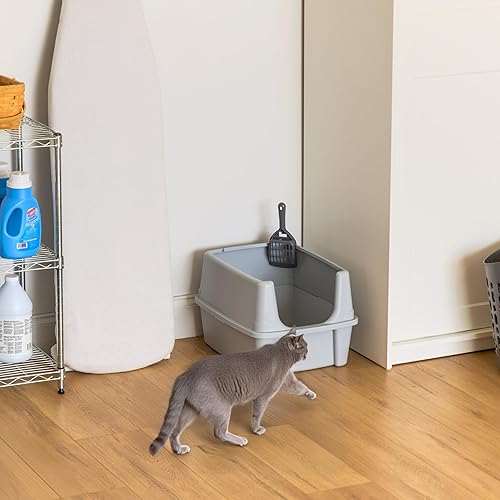




As an Amazon Associate we earn from qualifying purchases. Product prices and availability are accurate as of the date/time indicated.
Stainless Steel vs Plastic Litter Box at a Glance
| Kirecoo (stainless steel) | IRIS USA (plastic) | |
|---|---|---|
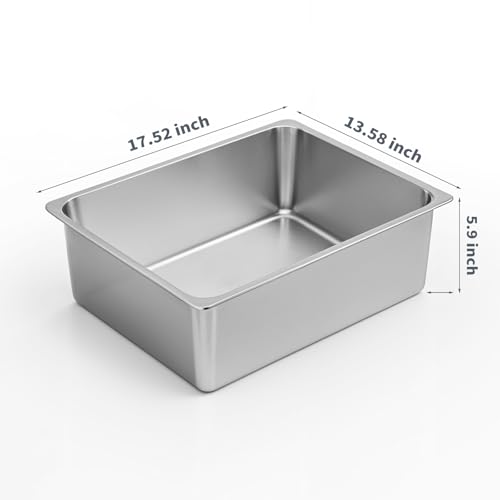
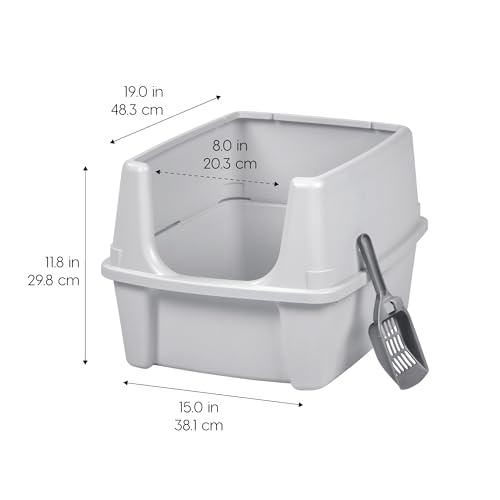
| Listed size | 17.52 x 13.58 x 5.9 inches | 19 x 15 x 11.75 inches |
| Listed weight | 2.27 pounds | 2 pounds |
| Walls | 6-inch sides | Tall walls form a scatter shield |
| Surface | Non-stick steel, maker says it does not hold odor | Molded plastic |
| Best for | Owners fighting lingering odor; kittens and small to medium cats | Cats that kick or spray high; tight budgets |
Odor and Scratches
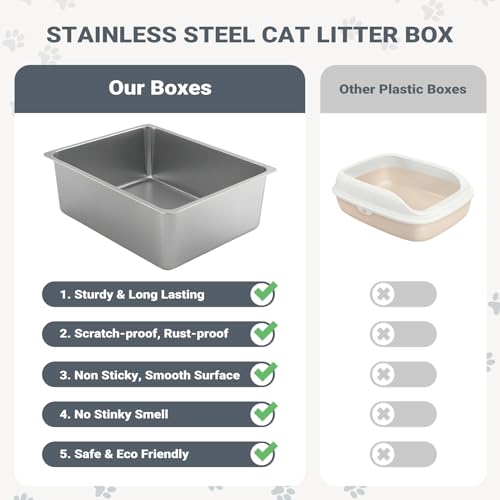
Plastic picks up scratches from scooping and claws over time, and residue and smell can settle into them. That is why makers of plastic boxes treat them as replaceable: Arm & Hammer, for example, suggests replacing its plastic litter box every 12 months. Steel resists scratches, and Kirecoo says its pan does not absorb or retain odor. If you scrub a plastic box and it still smells, a steel pan is the more lasting fix.
Shape, Height, and Covers
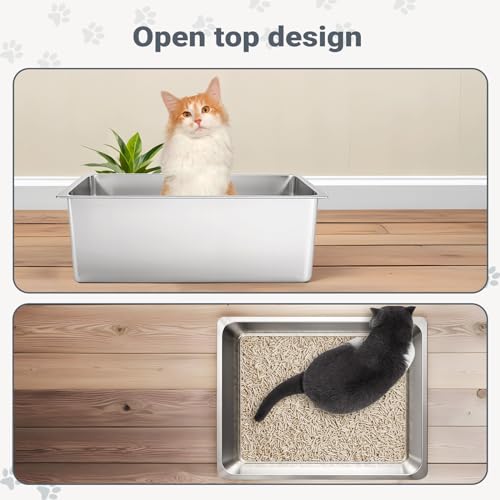
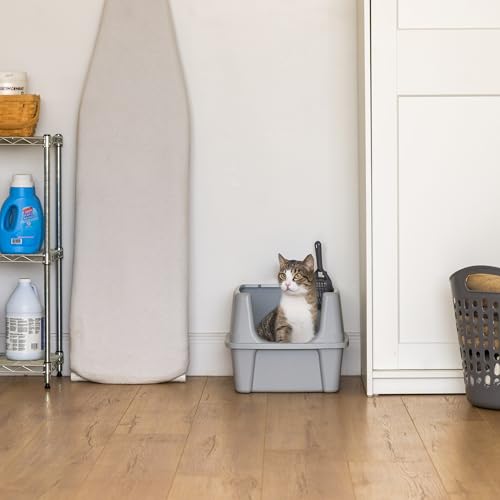
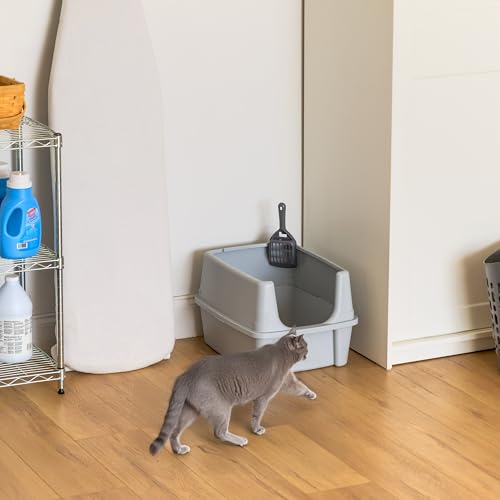
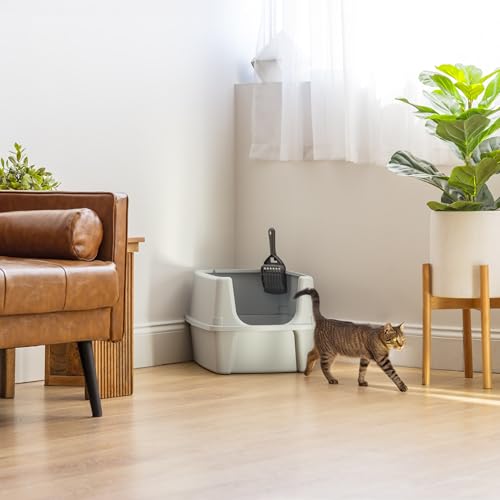
Plastic is easy to mold, so it comes in shapes steel rarely does: the IRIS box has walls 11.75 inches tall that act as a scatter shield, and most covered and top-entry boxes are plastic, though a few steel boxes add a plastic lid. Many steel pans have lower walls, like Kirecoo’s 6-inch sides, which are easier for kittens and seniors to step over but hold in less litter from a hard digger. High-sided steel boxes do exist; see our high-sided litter box picks.
Weight and Cleaning
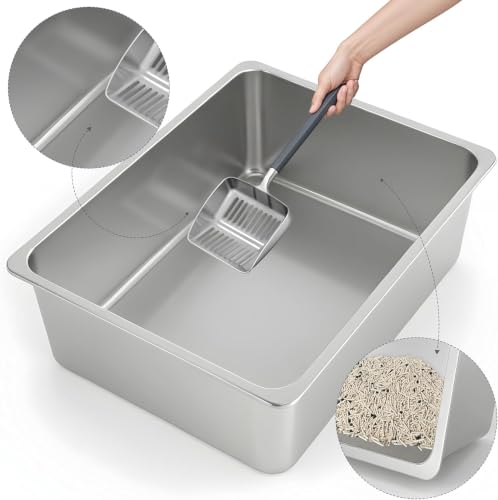
A small steel pan is not much heavier than plastic: Kirecoo lists 2.27 pounds and IRIS lists 2 pounds. Larger steel boxes with tall sides weigh more. Steel’s smooth surface lets clumps slide off, and Kirecoo describes its pan as non-stick, which makes a full wash quicker. Plastic is fine to wash too, until scratches make it harder to get fully clean.
Cost Over Time
Plastic costs less up front, and a basic pan is one of the cheapest cat supplies you can buy. Steel costs more at the start but does not need replacing for odor, so over several years the gap narrows. In a home with three cats and four boxes, that math matters more.
Which Should You Buy?
- Choose stainless steel if a plastic box keeps smelling after cleaning, or you want one box that lasts. Compare options in our stainless steel litter box picks.
- Choose plastic if you need tall walls, a hood, or a top entry, or you are buying several boxes on a tight budget.
- Mix both in a multi-cat home: steel for the busiest box, plastic where a cover or extra height helps. See all styles in our best litter box picks.
Whatever the material, a sudden change in your cat’s litter box habits, straining, or blood in the urine is a reason to call your veterinarian, not to swap boxes.
Why You Should Trust Us
We do not conduct our own product trials; our picks draw on published specifications, independent reviews, and Amazon owner ratings, which also set each product’s ICL Score. We may earn a commission from qualifying purchases, but that never affects our verdicts or scores. Read the full method in How We Review.
Frequently Asked Questions
Is a stainless steel litter box better than plastic?
For odor over the long run, usually yes, since steel resists the scratches that hold smell. Plastic is better for tall, covered, or top-entry designs and costs less.
How often should you replace a plastic litter box?
Follow the maker’s advice; Arm & Hammer suggests every 12 months for its plastic box. Replace it sooner if it still smells after a full wash.
Do cats like stainless steel litter boxes?
Most cats care about size, litter, and cleanliness more than the pan material. If you switch, keep the old box out for a while and use the same litter.
Are stainless steel litter boxes heavy?
Small open pans are not: Kirecoo lists 2.27 pounds. Large steel boxes with tall sides or lids weigh more.
About the author
Dave Curtis covers litter boxes for IndoorCatLab, including self-cleaning models, standard boxes, enclosures, and accessories. Each guide compares manufacturer specifications, owner ratings, and published independent reviews to show which box suits which home.